The missing column was the deal-breaker.缺的那一栏,才是真正的否决理由。
Rejected for being unclear, not for failing a test.被拒不因检测不合格,而因讲不清。
Easterlies · June 6, 2026 · 7 min readEasterlies · 2026年6月6日 · 约 7 分钟阅读
Summary📌 摘要
The powder was never flagged for contamination — it was flagged because nothing on file showed what was being tested, at what limit, or how often. A GFSI-format hazard register and a forward testing calendar turned that silence into a reviewable file.这款粉末不是因为疑似污染被拒,而是因为买家看不出你测了什么。补上一份危害登记表和检测日历,沉默就能变成审阅。
The file that couldn't be scored这份文件,为什么根本没法打分?
The rejection didn't say much, because there wasn't much to say. A U.S. specialty importer had already tasted the sample and liked it: a blended botanical powder, the kind of ingredient SKU that moves into the food channel rather than the supplement aisle. What came back after the spec sheet went in wasn't a list of failed numbers. It was a form status change, "under review," that never moved again, and a QA note that amounted to a shrug: nothing on file said what was being tested, at what limit, or how often.那次拒绝没说太多,因为确实也没什么可说的。一家美国特产食品进口商已经试过样品,而且喜欢:一款植物功能粉调配产品,属于走食品原料渠道、而非膳食补充剂货架的那类 SKU。规格表交上去之后,退回来的不是一份检测不合格清单,而是表格状态卡在"审核中",此后再没动过,外加一句质量团队的批注,说白了就是耸耸肩:材料里完全没写清楚到底测了什么、限值是多少、多久测一次。
That distinction matters more than it sounds like it should. A rejection over a specific failed result is a known problem with a known fix. A file that goes quiet because a reviewer can't tell what's controlled is a different animal entirely, because there's no specific thing to appeal.这个区别,比听起来重要得多。因为某个具体检测结果不合格而被拒,是一个有明确对策的已知问题。而一份因为审核员看不懂到底管控了什么而彻底冷场的文件,完全是另一回事,因为根本没有具体的点可以去申诉。
The factory hadn't done anything wrong that anyone could point to. It just hadn't given the reviewer anything to point to, period. A QA desk that has to sign off on an import decision doesn't treat a blank risk profile as neutral. It treats it as the worst case until shown otherwise.工厂没有做错任何能被指出来的事,问题是它压根没给审核员任何可以指的东西。一个要在进口决策上签字的质量岗位,不会把一份空白的风险画像当成中性信息处理,在被证明并非如此之前,它会被当成最坏的情况处理。
This is the part that's easy to miss from the outside: the powder wasn't flagged for contamination. It was flagged for being unscoreable. Those look identical in an inbox. They are not the same problem, and they don't have the same fix.从外面看很容易漏掉这一点:这款粉末不是因为疑似污染被标记的,而是因为无法评分被标记的。这两件事在收件箱里看起来一模一样,但完全不是同一个问题,也没有同一种解法。
A reviewer who can't tell what's controlled doesn't score your file as neutral. They score it as the worst case, because a blank line and a real hazard read identically from the outside.一个看不懂到底管控了什么的审核员,不会把你的文件当成中性信息处理。他们会按最坏的情况打分,因为在外人眼里,一栏空白和一项真实的危害看起来一模一样。
Why silence reads as danger in this category specifically为什么在这个品类里,沉默尤其读作危险
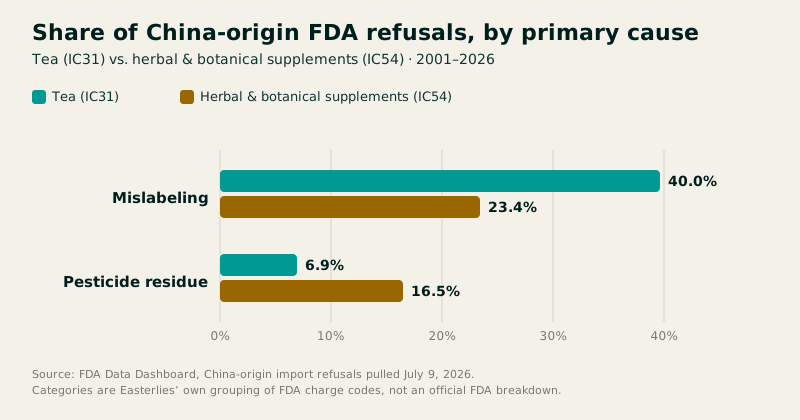
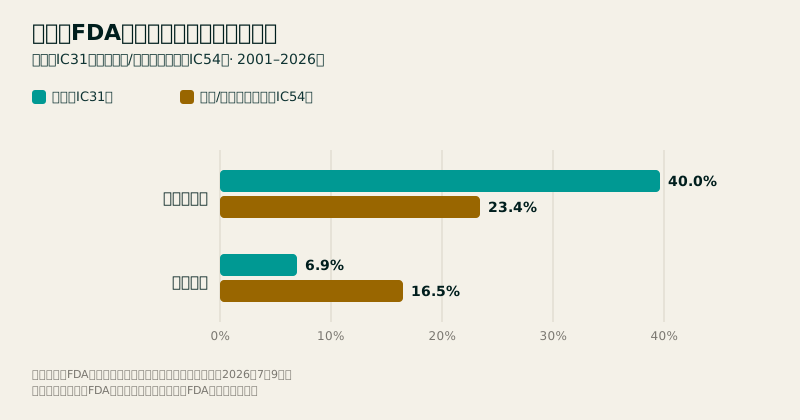
Tea and botanical powders imported from China sit inside an active, named FDA enforcement lane, not a hypothetical one. Import Alert 99-42 covers detention without physical examination, or DWPE, for heavy metal contamination in this exact category — meaning a shipment can be held at the port automatically, without FDA testing it, unless the importer has already provided evidence it's clean. Separate country-wide alerts cover pesticide residues in both raw and processed goods. These aren't dormant rules pulled from an old binder. They get revised and republished on a rolling basis, and a buyer's QA reviewer who works this category knows it. FDA's own refusal data for China-origin tea shows this lane is active in practice, not just on paper: a chemical or heavy-metal finding accounts for 13.8 percent of refusals, and pesticide residue another 6.9 percent.从中国进口的茶叶和植物粉,正处在一条真实存在、有名可查的 FDA 执法通道里,不是什么假设性的规则。99-42 号进口警示专门针对这个品类的重金属污染,规定可以"免现场检验直接扣留(DWPE)"——也就是说,只要进口商没有事先提交证明产品合格的证据,货物到港后可以不经 FDA 实际检测,直接被扣留。另有几项覆盖全国的警示,分别针对原料农产品和加工食品中的农药残留。这些都不是压在旧文件夹里睡大觉的条款,而是滚动修订、持续重新公布的,一位常年处理这个品类的买家质量审核员对此很清楚。FDA 自己的拒收数据显示,这条执法通道并非纸面文章:化学物质或重金属检出占中国产茶叶拒收原因的 13.8%,农药残留另占 6.9%。
That's the backdrop a thin file lands against. A reviewer isn't asking "is this specific shipment contaminated." They're asking "can I tell whether this supplier's controls would catch it if it were." A spec sheet with no hazard analysis, no fixed testing calendar, and CoAs that show up sporadically with no consistent panel leaves them with nothing to answer that question. The factory in this case had real floor-level practice behind it: metal detection, basic GMP. None of it had been written down in a form built for someone who has never seen the plant and never will.这就是一份单薄文件所面对的大背景。审核员问的不是"这一批货是不是真被污染了",而是"如果真被污染了,这家供应商的管控措施能不能拦下来"。而一份没有危害分析、没有固定检测周期、CoA 也是零零散散、检测项目还对不上的规格表,完全没法回答这个问题。这个案例里的工厂,车间层面确实有真实的操作:金属探测、基础 GMP。只是这一切从没被写成一份给"从没见过工厂、以后也不会来"的人看的材料。
So the read a reviewer arrives at isn't paranoid. It's pattern-matched against a category where heavy-metal and pesticide findings are a documented, ongoing concern. A supplier who can't show their testing logic gets treated the same as a supplier who has something to hide, whether or not that's remotely true. Ambiguity doesn't get the benefit of the doubt here. It gets scored as risk, because that's the only score a blank field allows.所以审核员得出的判断并不是过度紧张,而是对照一个重金属和农残检出记录有据可查、持续存在的品类做出的模式匹配。一个说不清自己检测逻辑的供应商,会和一个真的有事要瞒的供应商被同等对待——不管事实是不是这样。含糊在这里得不到疑罪从无的对待,它会被计入风险,因为一栏空白能给出的分数,也只有这一种。
Turning floor practice into something a stranger can audit把车间里的操作,变成陌生人也能审阅的东西
The fix wasn't a new safety practice. It was translating an existing one into a structure a reviewer could actually work with. We started by building a hazard and risk register in a standard format compatible with GFSI, the food-safety certification framework most buyers benchmark against, covering the three hazard classes that matter for this product: heavy metals, pesticide residues, and microbiological risk. Each line named the hazard, the likelihood, the existing control, the evidence on file for that control, and the residual risk left over. That's a format a QA desk can read top to bottom and check against, instead of taking someone's word for it.解决办法不是发明一套新的安全操作,而是把已经存在的操作,翻译成审核员真正能用得上的结构。我们从建立一份标准格式的危害与风险登记表开始——格式兼容 GFSI(大多数买家用来做基准比对的食品安全认证框架)——覆盖这款产品真正相关的三类危害:重金属、农药残留、微生物风险。每一行都写明危害项、可能性、现有管控措施、该措施对应的在案证据,以及剩余风险。这是一种质量团队能从头读到尾、逐项核对的格式,而不是单凭一句口头保证。
From that register came a forward-looking testing plan, not a folder of old lab reports. Which panel, which lab, what frequency, tied line by line back to the hazards the register named. A buyer looking at a stack of disconnected CoAs from different dates and different scopes can't tell if that's a system or a lucky handful of passing tests. A calendar tied to a hazard register reads as the former, and reading as the former is the entire point.有了这份登记表打底,接下来是一份前瞻性的检测计划,而不是一叠旧的检测报告。哪个检测套餐、哪家实验室、多高频率,逐项对应回登记表里列出的危害项。买家看着一堆日期不同、覆盖范围也不同、彼此毫无关联的 CoA,没法判断这到底是一套体系,还是刚好抽中了几次合格的检测。而一份对应到危害登记表的检测日历,读起来就是前者,能读成前者,正是整个工作的意义所在。
We coordinated an introduction to an accredited third-party lab for the client to commission directly — the kind of facility accredited to ISO/IEC 17025, the international standard confirming a lab's results are technically reliable, that runs tea-specific heavy-metal and pesticide panels. We didn't choose the client's testing methodology, interpret the results as a pass/fail authority, or put our name on the numbers. That line matters and we kept it: Easterlies is not the lab, not the certifier, and not the FSVP importer of record (the US importer legally responsible for verifying supplier food safety). The register and the calendar are ours. The test results themselves belong to an accredited lab the client engaged on their own account.我们对接了一家经认证的第三方实验室,由客户直接委托检测——就是那种拿到 ISO/IEC 17025(国际公认的实验室检测能力认证标准,确认一家实验室的检测结果技术上站得住脚)认证、专门做茶叶重金属和农残套餐检测的机构。我们没有替客户选定检测方法,没有以权威身份解读检测结果的合格与否,也没有在数据上署名。这条界限很重要,我们也守住了:Easterlies 不是实验室,不是认证机构,也不是FSVP 进口商(依法负责核查供应商食品安全的美国进口商)。登记表和检测日历是我们做的,检测结果本身,属于客户自己委托的那家认证实验室。
What moved, and what we're not claiming真正改变的是什么,我们又没有声称什么?
We also mapped the register against the specific numeric thresholds the client's target buyer channel actually applies, separating what was legally binding from what was channel-preferred, so the client wasn't guessing which limits mattered to this particular buyer versus which ones were general industry practice. That mapping step is often where a client discovers they've been over-preparing for the wrong number.我们还把这份登记表对照目标买家渠道实际采用的具体数值限值做了梳理,把哪些是法律强制、哪些是渠道偏好分开来,这样客户就不用再去猜,到底哪些限值对这个具体买家真正要紧,哪些只是行业里普遍的做法。这一步梳理,往往正是客户发现自己一直在为错误的数字过度准备的地方。
The proof point here is narrow on purpose. The buyer's file status moved from unreadable silence to received, complete, under technical review, a documented status change, not an approval and not a sale. A structured hazard register existed where nothing but scattered practice existed before. A forward testing calendar existed where only sporadic, disconnected lab reports existed before. For the first time, the client could answer a buyer's specific question, "what's your lead testing frequency and which lab runs it," with a current, documented answer instead of a scramble.这里的成果证据,刻意保持得很窄。买家对这份文件的状态,从读不懂的沉默,变成了已收到、资料完整、正在技术审查中——这是一次有据可查的状态变化,不是一次批准,也不是一笔成交。一份结构化的危害登记表由此存在,此前只有零散的操作,什么都没写下来。一份前瞻性检测日历由此存在,此前只有零星、互不关联的检测报告。客户第一次能够回答买家的具体问题——"你们的铅检测频率是多少,哪家实验室在做"——给出一个当下、有据可查的答案,而不是临时现凑。
What this case can't claim matters just as much. No guaranteed approval. No specific order or dollar figure. No change to the product's actual safety profile, because the dossier didn't create new controls, it made real ones legible. The powder was never the risk. The blank space next to "testing plan" was, and blank spaces are exactly the kind of problem a documented, audited structure closes, one line item at a time.这个案例不能声称什么,同样重要。不保证获批。没有具体订单或金额。产品实际的安全状况也没有因此改变,因为这份资料包没有凭空造出新的管控措施,它只是让本就真实存在的措施变得可读。这款粉末从来都不是风险所在。"检测计划"那一栏的空白才是,而一套有据可查、经得起审阅的结构,恰恰就是用来一项一项地把这类空白关掉的。
Scope涵盖
- 01 Readiness diagnostic distinguishing a documentation gap from a safety gap准备度诊断,区分文档缺口与安全缺口
- 02 GFSI-format hazard and risk register covering heavy metals, pesticide residue, and microbiological risk按 GFSI 格式建立涵盖重金属、农药残留和微生物风险的危害与风险登记表
- 03 Forward-looking testing plan tied to each identified hazard针对每一项已识别危害的前瞻性检测计划
- 04 Specialist coordination with an accredited third-party lab对接经认证的第三方实验室
- 05 Buyer standards mapping against the specific thresholds the target channel applies按目标渠道实际采用的具体限值做买家标准梳理
The outcome结果
The buyer's file status moved from no response and soft rejection to received, complete, under technical review, a documented status change, not a sales outcome. A structured hazard register existed where none did before, auditable against known GFSI practice. A forward testing calendar existed where only sporadic, uncoordinated lab reports existed before. We make no claim of guaranteed approval or that the product's underlying safety profile changed. The dossier organizes and evidences controls that were already real; it doesn't invent new ones.买家对该文件的状态,从"无回应 / 软性拒绝"变为"已收到、资料完整、正在技术审查中"——这是一次有据可查的状态变化,不是销售结果。一份结构化的危害登记表由此存在,此前没有,且能按已知的 GFSI 惯例逐行审阅。一份前瞻性检测日历由此存在,此前只有零散、未协调的检测报告。我们不承诺一定获批,也不声称产品本身的安全状况发生了变化。资料包整理并佐证了本就真实存在的管控措施,而非凭空制造新的措施。
What to take from this可迁移的经验
- A file that goes silent without naming a failure is a different problem than a rejection, and needs a different fix.文件"没声音",比被拒还麻烦——因为没有具体的点能申诉。
- Tea and botanical powders from China sit inside an active FDA enforcement lane for heavy metals and pesticides.中国茶叶和植物粉,正处在 FDA 重金属和农残的活跃执法通道里。
- A GFSI-format hazard register turns real floor-level controls into something a reviewer can actually audit.危害登记表能把车间里的真实操作,变成审核员能看懂的东西。
- The dossier organizes real controls — it never claims guaranteed approval or invents new ones.资料包只整理证据,不保证获批,也不凭空造管控措施。
When a buyer's QA desk goes quiet without naming a specific failure, check whether the gap is in the product or in the evidence trail before assuming the worst. A hazard register and a forward testing calendar, built in a format the reviewer already recognizes, often turns silence into a decision, even when nothing about the underlying product has changed.当买家的质量团队没有指出任何具体失败项,却突然安静下来时,先查清楚缺口是在产品本身,还是在证据链条上,再假设最坏的情况。一份危害登记表,加上一份前瞻性的检测日历,用审核员本就熟悉的格式写出来,往往能把沉默变成一个决定——哪怕产品本身什么都没变。
Glossary术语表
- Import Alert / DWPE进口警示/免现场检验直接扣留(DWPE)
- An FDA Import Alert flags an entire category of imports (like China-origin tea) as a known risk. Once one is active, shipments in that category can face detention without physical examination, or DWPE — meaning the shipment is held at the port automatically, without FDA even testing it, unless the importer has already supplied evidence it's safe.FDA 进口警示,把某一整个品类的进口货物(比如中国产茶叶)标记为已知风险。警示一旦生效,该品类的货物可能被"免现场检验直接扣留"(DWPE)——也就是说,只要进口商没有事先提交安全证据,货物到港后可以不经 FDA 实际检测,直接被扣留。
- ISO/IEC 17025ISO/IEC 17025
- The international standard that accredits a testing lab's technical competence. A lab accredited to it has been independently checked to produce results a buyer's QA reviewer can actually trust, as opposed to a lab that simply says it ran a test.国际公认的实验室检测能力认证标准。一家实验室拿到这项认证,意味着它经过独立核查,出具的检测结果买家的质量审核员可以真正信任,而不只是实验室自己说做过检测。
- Hazard and risk register危害与风险登记表
- A line-by-line document that names each food-safety hazard (like heavy metals or pesticide residue), how likely it is, what control is already in place, the evidence on file for that control, and the risk left over after the control. It's the format a QA reviewer expects, so real practices become auditable instead of just claimed.一份逐行记录的文件:每一项食品安全危害(比如重金属、农药残留)、发生的可能性、现有的管控措施、该措施对应的在案证据,以及管控之后剩下的风险。这是质量审核员默认期待的格式,能让真实存在的操作变成可核查的东西,而不只是一句口头保证。
- GFSIGFSI
- The Global Food Safety Initiative. It doesn't certify factories directly — it recognizes a handful of food-safety certification schemes as meeting the same bar, which is why documents built to a "GFSI-compatible format" are structured the way most buyers already expect.全球食品安全倡议(GFSI)本身不直接认证工厂,而是认可几套食品安全认证体系都达到同一标准,这也是为什么一份"GFSI 兼容格式"的文件,结构上正是大多数买家已经习惯的样子。
Sources资料来源
- FDA Import Alert 99-42 — Detention Without Physical Examination of Foods Due to Heavy Metal (Toxic Element) ContaminationFDA 99-42 号进口警示——因重金属(有毒元素)污染而免现场检验直接扣留
- ISO/IEC 17025:2017 — General requirements for the competence of testing and calibration laboratoriesISO/IEC 17025:2017——检测和校准实验室能力的通用要求
- FDA Import Alert 99-08 — Detention Without Physical Examination of Processed Human and Animal Foods for PesticidesFDA 99-08 号进口警示——因农药残留对加工类人类与动物食品实施免现场检验扣留