Not risky. Just unreadable.并非高风险,只是无法读懂。
The product was fine; the paperwork was unfileable.产品没问题,问题出在没法归档的文件。
Easterlies · July 4, 2026 · 7 min readEasterlies · 2026年7月4日 · 约 7 分钟阅读
Summary📌 摘要
The product was never the problem — what stalled the deal was that its evidence didn't exist in a form a U.S. buyer could read. FDA registration, a named U.S. Agent, and an English-format dossier closed the gap in weeks, not years.产品完全没问题,卡壳的从来不是产品本身,而是买家读不懂的文件。补齐 FDA 注册、美国代理人和英文证据包,几周就能翻篇。
Four questions, and real answers to none of them四个问题,一个都答不上来
The email that mattered wasn't a rejection. It was a one-page supplier pre-qualification request from a US importer who had already tasted the product and liked it. Four asks: the FDA foreign facility registration number and the name of its U.S. Agent (a US-based contact FDA can reach directly), the most recent third-party audit report, a certificate of analysis showing heavy metals and pesticide residues against US limits, and a signed statement describing the factory's role in the importer's own Foreign Supplier Verification Program file. Ordinary questions, for a QA reviewer who screens them every week.真正要命的那封邮件,不是拒绝信。它是一份一页纸的供应商预审请求,来自一位已经试过产品、也很喜欢的美国进口商。四个要求:FDA 境外工厂注册号和美国代理人(FDA 能直接联系上的美国本地联系人)联系方式,最近一次第三方审核报告,一份对照美国限值出具重金属和农残结果的检测报告,以及一份说明工厂在进口商自身外国供应商核查计划(FSVP)档案中所处角色的签字声明。对一个每周都要筛这些材料的质量审核员来说,这些都是再普通不过的问题。
The factory had a real answer to none of the four, not because the product had a problem, but because nothing existed yet in a form that could answer the question. Batch CoAs existed and showed real testing, just not standardized into one spec, not mapped to US limits. A domestic Chinese food-safety license existed, real and current, but it isn't a GFSI-benchmarked scheme — one of the food-safety certification standards, like SQF or BRCGS, that North American buyers actually recognize — so it didn't satisfy the audit-report field either.这四项,工厂一个都答不上来——不是因为产品有问题,而是因为还没有任何材料,能以回答这些问题的形式存在。批次 CoA 是有的,也确实做过检测,只是没有统一成一份规格文件,也没有对照美国限值。中国国内的食品生产许可证是真实有效的,可它不是 GFSI(一套被北美买家广泛认可的食品安全认证标准,比如 SQF、BRCGS)认可的体系,所以也满足不了审核报告那一栏的要求。
There was no FDA registration, because nobody at the factory had been told a foreign facility making food for US consumption is required to register and name a U.S. Agent before that product moves. There was no Prop 65 position on lead — California's Proposition 65, which requires a warning label if a product exposes consumers to more than a set threshold of a listed chemical like lead — because nobody had been asked before.没有FDA 注册,是因为工厂里从没人被告知:为美国市场生产食品的境外工厂,在产品启运之前,必须完成注册并指定一名美国代理人。没有 Prop 65(加州 65 号提案,规定产品若使消费者接触到超过限定阈值的铅等受管制化学物质,就必须加贴警示标签)铅暴露的立场,是因为此前从没人问过。
The deal didn't die. It went quiet, which is the worse outcome: no rejection to respond to, no reopened thread, just a questionnaire sitting half-answered in an inbox while a real, tasted, wanted product waited behind it.交易没有告吹,而是冷了下来——这其实是更糟的结果:没有拒绝可以回应,没有可以重新激活的对话,只有一份答了一半的问卷,静静躺在收件箱里,而它身后,是一个真实、被尝过、被想要的产品,在原地等待。
A blank field and a real risk look identical to a QA reviewer who has to file something either way.对一个不管怎样都得归档立案的质量审核员来说,一栏空白和一项真实风险,看起来一模一样。
The plant was never the problem问题真的出在工厂吗?
It's worth being exact about what "unreadable" meant here, because it's easy to hear that word and assume something was being hidden. Nothing was. The extraction and spray-drying line was real and running. The domestic food-safety license was real and current. Years of export relationships into other markets were real. What didn't exist was a US-legible record of any of it.有必要说清楚"读不懂"到底指什么,因为很容易一听这个词就以为有什么被隐瞒了。什么都没有。萃取和喷雾干燥产线是真实在运转的。国内食品生产许可证是真实有效的。多年通往其他市场的出口关系也是真实的。缺的,是把这一切转化成美国能读懂的记录。
FDA registration and a U.S. Agent are the clearest example, because they're not negotiable and they're not a quality judgment. Any foreign facility that manufactures, processes, packs, or holds food bound for US consumption has to register with FDA and designate a U.S. Agent, a US-based point of contact FDA can reach during business hours, before that product moves. Registration itself carries no FDA fee.FDA 注册和美国代理人是最清楚的例子,因为它们没有商量余地,也无关质量判断。任何为美国消费市场生产、加工、包装或存放食品的境外工厂,都必须先完成 FDA 注册、指定一名美国代理人——一位工厂在美国的联系人,工作时间内 FDA 能联系到——之后产品才能启运。注册本身不收 FDA 费用。
But it has to be renewed every other year, in the fourth quarter of even-numbered years, and FDA won't confirm a registration until the named U.S. Agent has agreed to serve in that role. A factory with no U.S. Agent on file isn't in a gray zone. It's simply not registered, and that's a hard field on the importer's form, not a soft one.但必须每两年(偶数年第四季度)续一次,而且在指定的美国代理人明确同意履行这一角色之前,FDA 不会确认注册。一家没有在案美国代理人的工厂,不是处在什么灰色地带,它就是没有完成注册——这是进口商表格上的一道硬性字段,不是软性问题。
The certification question runs on a parallel but separate track. FSVP, the regulation governing the importer's own compliance obligation, puts the legal burden on the US importer, not the foreign factory. But the importer can't discharge that burden without a hazard analysis and verification evidence coming from the factory itself. A domestic Chinese license, however genuine, isn't benchmarked against GFSI, the scheme category most North American buyers actually screen for. That gap doesn't mean the factory's food-safety practices are weak. It means nothing about them has been translated into the specific evidentiary language an importer's own file requires.认证问题走的是另一条平行但独立的路径。FSVP,这项规范进口商自身合规义务的规则,把法律责任放在美国进口商身上,而不是境外工厂身上。可进口商如果拿不到来自工厂的危害分析和核查证据,就没法履行这项义务。哪怕是真实有效的中国国内许可证,也没有对标 GFSI——北美大多数买家真正筛查的那个认证体系类别。这个缺口不代表工厂的食品安全实践不到位,只代表这些实践从没被翻译成进口商档案真正需要的那种证据语言。
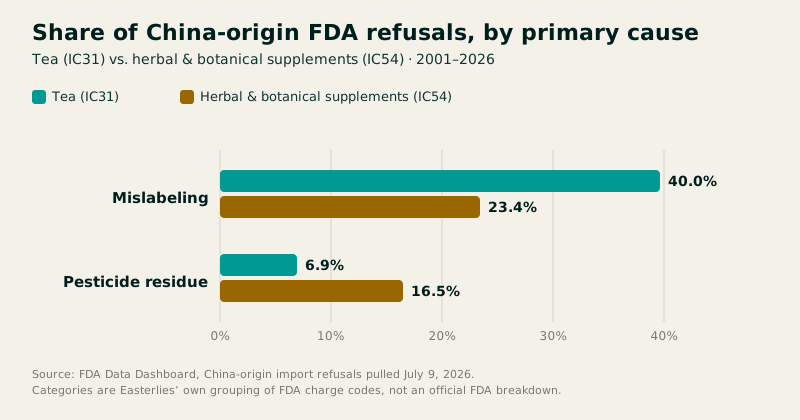
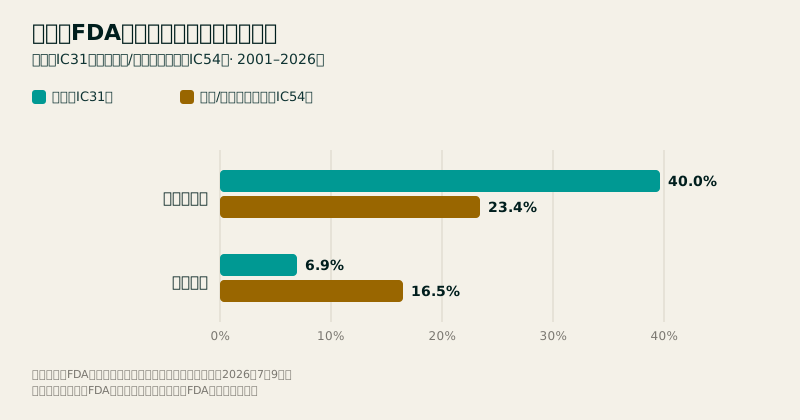
And the testing gap was a formatting gap more than a testing gap. Tea and tea-derived ingredients sit inside two active FDA import-alert categories, one for heavy metals and one for pesticide residues, which means a buyer's QA reviewer is specifically trained to check a supplier's numbers against those categories. A CoA that reports a result without showing it against the relevant US limit, without a Prop 65 lead exposure calculation attached, reads as absent evidence even when the underlying test was performed correctly. FDA's own refusal data for China-origin tea backs this up: mislabeling causes 40.0 percent of refusals, versus just 6.9 percent for pesticide residue, so a formatting gap like this one sits inside the single biggest real cause, not a minor one.而检测上的缺口,更多是格式问题,不是检测本身的问题。茶叶及茶类衍生原料,正处在 FDA 两个现行进口警示类别之内,一个针对重金属,一个针对农药残留,这意味着买家的质量审核员,本就是被专门训练去对照这两个类别核对供应商数据的。一份只报告结果、却不对照相关美国限值、也没有附上 Prop 65 铅暴露量计算的 CoA,即便底层检测做得没有问题,读起来也等同于证据缺失。FDA 自己的拒收数据也印证了这一点:中国产茶叶的拒收原因里,标签不合规占 40.0%,而农药残留只占 6.9%——像这样的格式缺口,恰恰落在真正的头号成因里,而不是无关紧要的小问题。
What a buyer-grade dossier is actually made of一份买家能用的资料包,究竟由什么构成
We started with a Readiness Diagnostic, not a document rewrite. It was a scored, written gap list — covering FDA registration status, certification posture, testing coverage, and English documentation maturity — with a rough cost to close each item, produced before committing to build anything. That step exists so a factory knows in writing what's actually missing and what it costs to fix, rather than discovering it one stalled questionnaire at a time.我们从准备度诊断开始,而不是直接改文件。这是一份书面、评分的差距清单,涵盖 FDA 注册状态、认证现状、检测覆盖面和英文文档成熟度,并附上每一项大致的修复成本——先摸清楚状况,再决定要不要着手搭建。这一步存在的意义,是让工厂能白纸黑字地知道到底缺什么、修复要花多少钱,而不是靠一次次问卷卡壳去慢慢发现。
The dossier itself took what already existed, the Chinese-language HACCP plan, the batch CoAs, the process documentation, and rebuilt it into an English, QA-reviewer-formatted package: a hazard analysis mapped to the vocabulary an FSVP importer's own file expects, a standardized spec sheet, an allergen statement, and a document index so a buyer's reviewer isn't left asking where something lives. None of that invents a new safety practice. It translates a real one into a form the other side of the table can act on.资料包本身,用的是已经存在的东西——中文版 HACCP 计划、批次 CoA、工艺文件——重新构建成一份英文的、符合质量审核格式的文件包:一份对应到 FSVP 进口商档案实际要求词汇的危害分析、一份标准化规格表、一份过敏原声明,还有一份文件索引,让买家的审核人员不必再问"这个在哪"。这一切都没有凭空造出新的安全实践,只是把一项真实存在的实践,翻译成了对方能直接采用的形式。
Alongside it, a Buyer Standards Mapping separated what's actually mandatory, FDA registration, a U.S. Agent, an allergen declaration, from what's channel-preferred, a specific GFSI scheme, kosher or halal, organic, so the factory could spend on certification deliberately instead of defensively. And for the pieces that are regulated or third-party acts, the FDA registration filing itself, the heavy-metal and pesticide lab panel, a GFSI certification body, we identified the right category of specialist and coordinated the handoff and timeline. We didn't file as the U.S. Agent, run the lab tests, or issue any certificate. Those stay with the specialists licensed to do them.与此同时,一份买家标准梳理把真正强制的部分——FDA 注册、美国代理人、过敏原声明——和渠道偏好的部分——某个具体的 GFSI 体系、清真或犹太洁食认证、有机认证——区分开来,让工厂能有意识地投入认证预算,而不是出于防御心理盲目投入。至于那些属于受监管或第三方行为的环节——FDA 注册申报本身、重金属和农残实验室检测、GFSI 认证机构——我们锁定了正确的专业机构类别,并协调了对接和时间安排。我们没有以美国代理人身份申报,没有跑实验室检测,也没有签发任何证书,这些始终留给持证的专业机构去做。
What actually changed, and what didn't真正改变了什么,什么又没变?
FDA registration went in with a named, responsive U.S. Agent on record, which closes the single most common hard disqualifier before a reviewer opens the rest of the file. The dossier came back organized enough that an internal QA-style read judged it decision-useful: complete index, English hazard analysis in FSVP vocabulary, standardized spec sheet, current contaminant testing with a Prop 65 lead exposure calculation attached instead of a bare number. The standards mapping told the factory which certification track its actual target buyers cared about, so a GFSI scheme nobody downstream was asking for didn't get built and paid for by default.FDA 注册连同一位具名、随时能联系上的美国代理人一并提交,在审核员翻开资料包其余部分之前,就先化解掉了最常见的那个硬性否决项。资料包整理得足够清楚,一次内部质量式的审阅将其判定为"有用":完整的索引、用 FSVP 术语写的英文危害分析、标准化规格表、附带 Prop 65 铅暴露量计算(而不是一个孤零零的数字)的现行污染物检测结果。标准梳理告诉工厂,它真正的目标买家在意的是哪条认证路径,这样一来,下游没人要求的某个 GFSI 体系,就不会被默认搭建和支付。
What we didn't do matters just as much. We aren't the FSVP importer, the certifying body, or the lab, and none of that changed. A GFSI certification, if the factory pursues one, still runs on its own six-to-twelve-month track, independent of the dossier and not waited on to ship it. We didn't contact the original importer on the factory's behalf, and we made no claim to any relationship with them. If that stalled thread was still open, the outcome we can honestly claim is a buyer-filable response going back into it, tracked as the questionnaire reopening, not as a deal won.我们没做的部分同样重要。我们不是 FSVP 进口商、不是认证机构、也不是实验室,这一点没有改变。如果工厂后续推进 GFSI 认证,它仍然走自己独立的六到十二个月周期,与资料包无关,也不会拖着资料包等它。我们没有代表工厂联系原先的进口商,也没有声称与对方有任何关系。如果那条搁置的对话线仍然开着,我们能诚实声称的结果,是一份可提交给买家的回复重新发回去,记录为"问卷重新激活",而不是"成交"。
The product was never the risk. A buyer's QA reviewer simply had nothing to read, and nothing to read defaults to no. Making the file legible didn't change what the factory could produce. It changed whether anyone downstream could tell.产品从来都不是风险所在。买家的质量审核员只是无从可读,而无从可读,默认就是"不行"。让文件变得可读,并没有改变工厂能做出什么,改变的是下游有没有人能看得出来。
Scope涵盖
- 01 Readiness Diagnostic准备度诊断
- 02 Buyer-Readiness Dossier买家准备资料包
- 03 Buyer Standards Mapping买家标准梳理
- 04 Specialist Coordination专家协调
The outcome结果
The FDA registration goes in with a named, reachable U.S. Agent, which clears the most common hard "no" before a reviewer even opens the file. The dossier comes back marked useful by the people who screen these for a living. You also learn which certification your buyer actually needs, if any. We make no promise of an order, only a file that withstands the buyer review that has repeatedly stalled these deals.FDA 注册连同一位具名、随时能联系上的美国代理人一并提交,在审核员翻开资料之前,就先化解掉最常见的那个硬性"不"。资料包会被那些以审核为生的人判定为"有用"。你也会弄清楚,你的买家到底需要哪一项认证(如果需要的话)。我们不承诺为你带来订单,只承诺一份经得起买家审核的资料;而正是这道审核,此前一再让你的生意受阻。
What to take from this可迁移的经验
- A stalled deal often signals a documentation gap, not a product problem.买家的"软拒绝",多半是文件缺口,不是产品问题。
- FDA registration requires a named U.S. Agent — without one, registration doesn't go through.没有美国代理人,FDA 注册就通不过。
- Certify only for what your actual buyer requires, not every scheme you've heard of.认证只做买家真正要求的那一项,别照单全收。
- Mislabeling causes 40 percent of FDA refusals for China-origin tea, far more than pesticide residue.中国茶叶 FDA 拒收里,标签不合规占比高达 40%。
When a real product gets a soft no from a buyer, check whether the gap is in the product or in the paperwork before assuming the worst. Most of the time it's legibility, and legibility is fixable in weeks, not years.当一个真实的产品从买家那里得到一个委婉的"不行"时,先查清楚问题出在产品本身,还是出在文书工作上,再假设最坏的情况。多数时候,问题只是可读性,而可读性是几周就能修好的事,不是要花上几年。
Glossary术语表
- FDA facility registrationFDA 工厂注册
- The requirement that any foreign facility making food for U.S. consumption register with the FDA and renew that registration every two years, in the last quarter of each even-numbered year. There's no fee to register, but a lapsed or missing registration is a hard stop before a reviewer even looks at anything else.任何为美国市场生产食品的境外工厂,都必须在 FDA 完成注册,并在每个偶数年的第四季度续期。注册本身不收费,但一旦过期或从未注册,审核员看都不用看其他材料,直接就是一个绕不过去的硬性卡点。
- U.S. Agent美国代理人
- A US-based contact that a foreign food facility must name when it registers with the FDA — someone FDA can reach by phone or in person during business hours. Without a named, confirmed U.S. Agent, the registration itself doesn't go through.境外食品工厂在 FDA 注册时必须指定的一位美国本地联系人——工作时间内 FDA 能直接联系到的人。没有确认好的美国代理人,注册本身就无法完成。
- GFSIGFSI
- The Global Food Safety Initiative. It doesn't certify factories directly — it recognizes a handful of food-safety certification schemes (SQF and BRCGS among them) as meeting the same bar, so a buyer can accept any one of them instead of demanding one specific scheme.全球食品安全倡议(GFSI)本身不直接认证工厂,而是认可几套食品安全认证体系(比如 SQF、BRCGS)都达到同一标准,这样买家接受其中任何一套认证即可,不必非要求某一个特定体系。
- Prop 65Prop 65
- California's Proposition 65, a state law requiring a warning label if a product exposes consumers to more than a set threshold of a listed chemical, including lead. It's a labeling requirement, not a judgment about whether the product is unsafe.加州 65 号提案,一项加州法律,规定产品若使消费者接触到超过限定阈值的受管制化学物质(包括铅),就必须加贴警示标签。这是一项标签要求,不是对产品是否安全的判定。
- Mislabeling (FDA refusal category)标签不合规(FDA 拒收类别)
- The FDA's term for a shipment refused because of a problem with the label or paperwork itself — missing information, wrong format, unsupported claims — as distinct from a refusal caused by contamination in the product. For China-origin tea, it's the single biggest cause of refusals.FDA 用来指因标签或文件本身有问题——信息缺失、格式不对、宣称站不住脚——而拒收货物的类别,区别于因产品本身受污染而拒收。对中国产茶叶来说,这是拒收原因里占比最高的一类。