Knowledge知识
The FDA Doesn't Refuse Chinese Tea for the Reason You ThinkFDA拒收中国茶叶,问题大多出在标签,不在农药
Sorted by FDA charge code, not assumption.基于FDA公开拒收数据的分析
Easterlies · July 9, 2026 · 6 min readEasterlies · 2026年7月9日 · 约 6 分钟阅读
Ask a Chinese tea exporter, or the buyer vetting one, what the biggest FDA risk is, and pesticide residue comes up almost immediately. It’s the headline story: illegal pesticide residue, FDA’s Import Alert 99-08, a shipment turned back because someone upstream used the wrong chemical.
For tea leaf specifically, that’s mostly not what’s happening.
We went through FDA’s own import-refusal data for China-origin tea and China-origin herbal and botanical supplements: more than 300 tea refusals and over 2,000 supplement refusals filed since 2001. The pattern is more specific, and more fixable, than “FDA is worried about pesticides.”
What we actually looked at
FDA logs every refused shipment with a specific charge code behind it: missing English labeling, undeclared allergens, illegal pesticide residue, and so on. We pulled every China-origin refusal filed under FDA’s Industry Code 31 (Coffee and Tea) and Industry Code 54 (the broader category that covers herbal and botanical “teas” like chrysanthemum or goji, ginseng, and other extracts) from 2001 through mid-2026. Then we grouped the charge codes into categories: mislabeling, pesticide residue, chemical or heavy-metal contamination, and so on.
That grouping is our own reading of FDA’s charge codes, not an official FDA breakdown, so treat the percentages below as an analysis, not a government-published statistic. It’s also a reason to check FDA’s own records directly, not a secondary summary. Even the basic product code is easy to get wrong: tea’s actual FDA code is Industry Code 31, and a nearby number, 24, is vegetables.
This isn’t stale data either. 2025 was the second-highest year on record for tea refusals, and the annual count has stayed in roughly the same 10-to-30 band since 2008, with no clear downward trend.
Tea: it’s mostly the label, not the leaf
Of 305 China-origin tea refusals in FDA’s data, the single biggest cause is mislabeling: 122 refusals, 40.0 percent. The specific gaps that show up again and again are missing English-language labeling, missing or incorrect Nutrition Facts, no ingredient list, and no importer or firm name on the package.
Pesticide residue, the thing everyone worries about, accounts for 21 refusals: 6.9 percent. A chemical or heavy-metal finding, mostly melamine or a “poisonous” charge, shows up more often than pesticide does: 42 refusals, 13.8 percent.
If you supply tea: the fastest, cheapest fix on this list isn’t a lab test. It’s a proper US-format label: English text, a Nutrition Facts panel built to US rounding and serving-size rules, a complete ingredient list, and your firm’s name on the package. None of that requires a certifier or a chemist.
If you buy tea: ask to see the actual label artwork a supplier plans to ship with, not a translated spec sheet. Correct English on a spec sheet and a US-format Nutrition Facts panel are two different documents, and that gap is where a surprising share of shipments get stopped.
The other fixable gap is a filing, not a contamination finding
The second-largest cause is narrower, and once you know it exists, straightforward to close. 62 of the 305 tea refusals, 20.3 percent, were cited for both a missing Food Canning Establishment (FCE) registration and a missing scheduled-process filing. Both trace to the registration and process-filing requirements for low-acid canned and acidified foods under 21 CFR Parts 108 and 113.
This is almost certainly a canned or bottled tea problem, not a loose-leaf or bagged one. 35 of the 305 tea refusals in the dataset were specifically coded as liquid tea.
If you make or plan to ship ready-to-drink or bottled tea into the US, this registration and process filing is a known, specific step, not a discretionary one, and it has nothing to do with whether the tea itself is contaminated. FDA happens to file it under its adulteration rules, but it’s a paperwork requirement, not a food-safety finding.
Where the pesticide fear is earned
The picture changes once you leave tea leaf and move into herbal and botanical supplements: ginseng, chrysanthemum and goji blends, and other botanical extracts. FDA files these under a separate industry code, 54, and the refusal pattern looks nothing like tea’s.
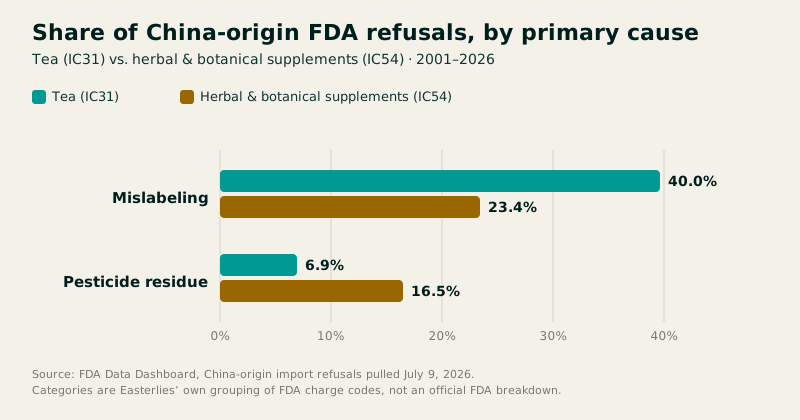
| Tea (IC31) | Herbal & botanical supplements (IC54) | |
|---|---|---|
| China-origin refusals, 2001 to mid-2026 | 305 | 2,167 |
| Top cause: mislabeling | 40.0% | 23.4% |
| Pesticide residue specifically | 6.9% | 16.5% |
Pesticide residue accounts for 358 of 2,167 supplement refusals, 16.5 percent, more than double tea’s rate. Broader adulteration (pesticide residue, microbial contamination, chemical or heavy-metal issues, and a cluster of supplement-specific problems combined) is the majority cause at 64.6 percent. Mislabeling is still common, 23.4 percent, but it’s no longer the dominant story the way it is for tea.
If you supply or buy herbal or botanical blends, the compliance conversation should look different from tea’s. Contaminant testing and sourcing controls deserve real budget here, not just a clean label. A chrysanthemum or goji “tea” gets classified with ginseng and herbal extracts for FDA’s purposes, not with green or black tea, and the risk profile follows the classification, not the word “tea” on the package.
The claims problem hiding inside “other”
One more pattern is worth naming, because it doesn’t show up as its own line item. It hides inside a catch-all “other” category.
For herbal and botanical supplements, 223 refusals (10.3 percent) fall into a bucket dominated by a single charge: UNAPPROVED. That means FDA decided a product’s own marketing made a disease or treatment claim strong enough to treat the product as an unapproved new drug rather than a food. Counting every instance of that charge across the full dataset, not just cases where it was the primary reason for refusal, it appears 379 times.
This isn’t a theoretical risk. It’s the same failure mode we wrote about in a claims-language case study. Language that reads as ordinary marketing in one market, “detox,” “lowers blood pressure,” “boosts immunity,” crosses a real line in the US. A structure-and-function claim becomes a disease claim, and the product becomes, legally, an unapproved drug. FDA’s own refusal data shows this happening at scale, not as an edge case.
Easterlies view — The mistake we see most often is treating “FDA compliance” as one undifferentiated risk to insure against, instead of a short, sequenced list of specific fixes. For loose-leaf or bagged tea, the label is worth fixing first: it’s cheap, entirely within a supplier’s control, and the single most common reason a shipment gets turned back. For canned or bottled tea, the FCE registration and process filing are a compliance step, not a manufacturing overhaul. Skip it, and you lose a shipment to paperwork instead of the product. For herbal and botanical blends, the numbers argue for spending more, earlier, on testing rather than on the label. We’re not the certifier, the lab, or the labeling specialist in any of this. What we help with is figuring out which of those a given product actually needs first, instead of guessing.
A rough order of operations
- Loose-leaf or bagged tea: fix the label first. It’s the single most common reason a shipment gets refused, and it’s entirely in a supplier’s control.
- Canned or bottled tea: confirm the FCE registration and process filing are actually filed, not just planned.
- Herbal or botanical blends: budget for contaminant testing and sourcing verification before anything else. This is the category where the risk looks like what people assume tea’s risk looks like.
- Any product with marketing copy attached: put a claims review on the list too, next to the label and the lab report, not instead of them.
None of this replaces a lab, a labeling specialist, or counsel once a claim gets close to the line, and we’re not any of those things. What we can do is help you work out which of the above actually applies to your product before you spend money on the wrong fix. If that’s useful, get in touch, and if it turns out you’re not ready yet, we’ll tell you that too.
问中国茶叶出口商,或者正在考察供应商的北美买家,FDA最大的风险是什么,十有八九会先说到农药残留。这几乎是标准答案:非法农药残留、FDA 99-08号进口警示、货物因为种植环节用错了药被拒收。
但具体到茶叶本身,这多半不是真正在发生的事。
我们查了FDA自己的进口拒收数据,覆盖中国产茶叶和中国产草本/植物类膳食补充剂——2001年以来,茶叶拒收300多起,补充剂拒收2000多起。数据呈现的规律,比”FDA担心农药”具体得多,也好整改得多。
我们实际做了什么
FDA对每一起拒收都记录了具体的指控代码:缺少英文标签、未申报过敏原、非法农药残留,等等。我们抓取了2001年到2026年年中、FDA行业代码31(咖啡与茶)和行业代码54(更宽泛的一类,涵盖菊花、枸杞等草本”茶”、人参和其他植物提取物)下所有中国产拒收记录。再把这些指控代码归入几个大类:标签不合规、农药残留、化学品/重金属污染,等等。
这套分类是我们自己对FDA指控代码的归纳,不是FDA官方发布的分类口径,所以下面的百分比应该当作一次分析结果来看,而不是政府统计数字。所以我们直接查了FDA原始记录,不照搬二手总结——连最基础的产品代码都容易搞错:茶叶真正对应的是行业代码31,隔壁的24其实是蔬菜。
这也不是过时的数据。2025年是有记录以来茶叶拒收数量第二高的年份,自2008年以来,年度拒收数大致都维持在10到30起这个区间,没有明显的下降趋势。
茶叶:问题大多出在标签,不在茶叶本身
305起中国产茶叶拒收里,最大的单一成因是标签不合规:122起,占40.0%。反复出现的具体缺口是缺少英文标签、营养成分标示缺失或错误、没有成分列表、标签上没有进口商或企业名称。
大家最担心的农药残留,只占21起,6.9%。化学品或重金属问题(主要是三聚氰胺或”有毒”类指控)反而比农药更常见:42起,13.8%。
如果你是茶叶供应商: 这份清单里最快、最省钱的整改项不是送检,而是一份真正符合美国格式的标签——英文文本、按美国四舍五入和份量规则做的营养成分表、完整的成分列表、包装上的企业名称。这些都不需要认证机构,也不需要化验。
如果你是茶叶买家: 该看的是供应商打算实际用来出货的标签成品,而不是一份翻译过的规格表。规格表英文没问题,和一份符合美国格式的营养成分表,是两份不同的文件——这中间的差距,正是不少货物被卡住的地方。
另一个能整改的缺口,是备案,不是污染问题
第二大成因范围更窄,一旦知道它存在,整改起来也直接。305起茶叶拒收里有62起(20.3%)同时涉及两项指控:缺少食品罐头厂(FCE)注册,以及缺少加工工艺备案。这两项对应的是21 CFR第108、113部分规定的低酸罐头食品/酸化食品注册与加工工艺备案要求。
这几乎可以肯定是罐装或瓶装茶饮的问题,而不是散装或袋泡茶的问题:305起茶叶拒收里,有35起被专门归类为”液态茶”。
如果你生产或打算出口即饮或瓶装茶到美国,这项注册和工艺备案是一个明确、具体的步骤,不是可选项,而且它和茶叶本身是否受污染没有关系。FDA把它归在掺杂条款下处理,但它本质上是一项文件要求,不是食品安全问题。
农药的担心,放在这里才真正成立
离开茶叶叶片,进入草本/植物类补充剂——人参、菊花和枸杞类混合”茶”、其他植物提取物——情况就完全不同了。FDA把这一类归在另一个行业代码,54,拒收成因的分布也和茶叶完全不一样。
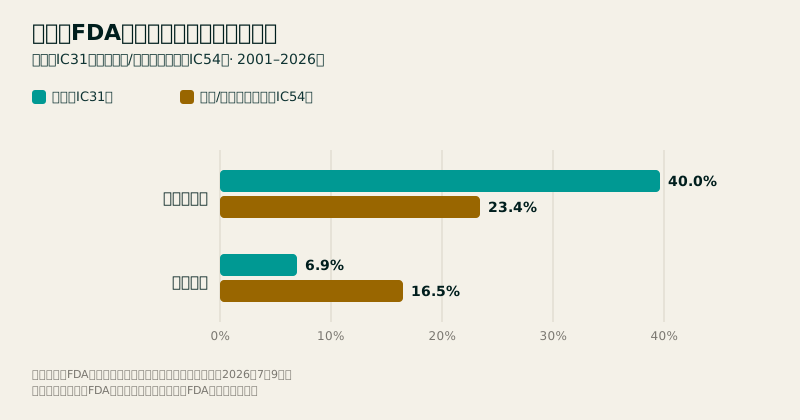
| 茶叶(IC31) | 草本/植物类补充剂(IC54) | |
|---|---|---|
| 中国产拒收数,2001年至2026年年中 | 305 | 2,167 |
| 首要成因:标签不合规 | 40.0% | 23.4% |
| 农药残留单项 | 6.9% | 16.5% |
农药残留占了2,167起补充剂拒收中的358起,16.5%,是茶叶的两倍以上。广义的掺杂类问题——农药加上微生物污染,加上化学品/重金属问题,再加上一组补充剂特有的问题——是多数成因,占64.6%。标签不合规依然常见,23.4%,但已经不再是像茶叶那样一家独大的问题。
如果你在做草本/植物类产品的供应或采购,合规该关注的重点和茶叶不一样。污染物检测和原料来源管控在这里值得投入更多预算,而不只是把标签做干净。菊花或枸杞”茶”在FDA眼里,归类和人参、草本提取物是一类,不是和绿茶、红茶一类,风险画像跟着分类走,不跟着包装上”茶”这个字走。
藏在”其他”类别里的宣称问题
还有一个规律值得单独说一说,因为它没有单独成一条统计项,而是藏在一个笼统的”其他”类别里。
草本/植物类补充剂里,有223起(10.3%)落在了一个由单一指控主导的类别里:UNAPPROVED(未经批准新药)。意思是FDA认定,产品自己营销文案里宣称的疗效,已经强到让监管部门把它当成一款未经批准的新药,而不是食品来处理。把整个数据集里所有出现过这项指控的次数都算上,不只是作为主因的情况,这个指控总共出现了379次。
这不是纸上谈兵的风险。这和我们在一篇关于宣称用语的案例里写过的,是同一种失误:“排毒""降血压""增强免疫力”,这类在一个市场读起来只是普通营销用语的表述,在美国踩到了一条真实的红线——一句结构/功能宣称一旦越界,就变成了疾病宣称,产品在法律上也就变成了未经批准的药品。FDA自己的拒收数据显示,这种情况是规模性的,不是个别案例。
信风观察 — 我们最常看到的误区,是把”FDA合规”当成一整块不分先后的风险来笼统防范,而不是拆成一份有先后顺序、具体可做的整改清单。散装或袋泡茶,标签值得最先修:便宜、完全在供应商自己掌控之内,也是货物被退回最常见的原因。罐装或瓶装茶,FCE注册和工艺备案是一道合规程序,不是要推倒重来的生产改造,跳过它,货物很可能栽在文件上,而不是产品本身。草本/植物类混合产品,数据说明更该尽早把预算投在检测上,而不是标签上。这些事情里,我们都不是认证机构、不是化验室,也不是标签顾问。我们能帮上忙的,是帮你判断一款具体的产品最先真正需要哪一项,而不是靠猜。
一份大致的先后顺序
- 散装或袋泡茶: 先修标签。这是货物被拒收最常见的单一原因,也完全在供应商自己的掌控之内。
- 罐装或瓶装茶: 确认FCE注册和工艺备案是真的已经完成,而不只是计划中。
- 草本/植物类混合产品: 把污染物检测和原料来源核查放在最前面,其他事情往后排。这是那个风险画像真正接近大家对茶叶的想象的品类。
- 任何带营销文案的产品: 把宣称审查也加进清单,和标签、检测报告并列,不是替代它们。
以上都替代不了化验室、标签顾问,或者宣称接近红线时的法律意见,我们也不是这些角色。我们能做的,是在你为一个可能用不上的整改项花钱之前,帮你判断上面这几项,哪一项对你的产品真正适用。如果这对你有用,欢迎联系我们——如果判断下来你还没准备好,我们也会如实告诉你。
About Easterlies关于信风出海
Good products deserve to cross oceans. Easterlies carries yours all the way across.好产品值得跨过大洋,信风出海为您一路助航。
Book a free 30-minute call预约 30 分钟免费评估