Knowledge知识
What a North American Buyer's QA Reviewer Actually Checks北美买家的质量审核员到底在看什么
The documents to prepare before a buyer ever asks.买家开口前,先备齐该准备的质量文件。
Easterlies · July 7, 2026 · 3 min readEasterlies · 2026年7月7日 · 约 3 分钟阅读

Most first-time exporters find out what a buyer’s QA team wants after the buyer asks for it, usually mid-negotiation, usually with a short deadline. The list below is not exhaustive and every buyer’s checklist looks a little different, but these are the categories that come up again and again.
FDA facility registration
Any facility outside the US that manufactures, processes, packs, or holds food intended for US consumption has to register with the FDA and renew that registration every two years. It’s a baseline check, not a certification of quality, but a buyer’s compliance team will ask for your registration number early and will not move forward without one.
The Foreign Supplier Verification Program
Under FSMA, the legal obligation to verify a foreign supplier’s food safety practices sits with the US importer of record, not with you. In practice, though, the importer’s verification work runs through your paperwork: your hazard analysis, your process controls, your testing records. A supplier who already has these organized moves through this step faster than one who has to assemble them on request.
GFSI-recognized certification
Retail and foodservice buyers increasingly ask for certification under a scheme recognized by the Global Food Safety Initiative, most commonly SQF, BRCGS, or FSSC 22000. Not every buyer requires it, but many large retail accounts treat it as a precondition rather than a nice-to-have. If you’re targeting that tier of buyer, find out which scheme they prefer before you invest in an audit.
A Certificate of Analysis that actually says something
A CoA is supposed to be batch-specific. At minimum, it should name:
- the lot number
- the test date
- the testing lab
- the actual results, measured against a stated limit
A surprising number of the CoAs that circulate in early supplier conversations are generic, undated, or carry the phrase “results on file” without attaching the file. A reviewer who has seen a few hundred of these will notice the difference in about ten seconds. It’s a fast way to lose credibility before the conversation has really started.
Contaminant and heavy-metal screening
For tea specifically, lead and cadmium levels have drawn scrutiny in the US, partly because of California’s Proposition 65 warning requirements for products containing certain chemicals above defined thresholds. This doesn’t mean every tea needs a warning label, but a buyer’s QA team will often want to see recent heavy-metal test results as part of onboarding, especially for a first order.
Labeling that matches US format, not just US language
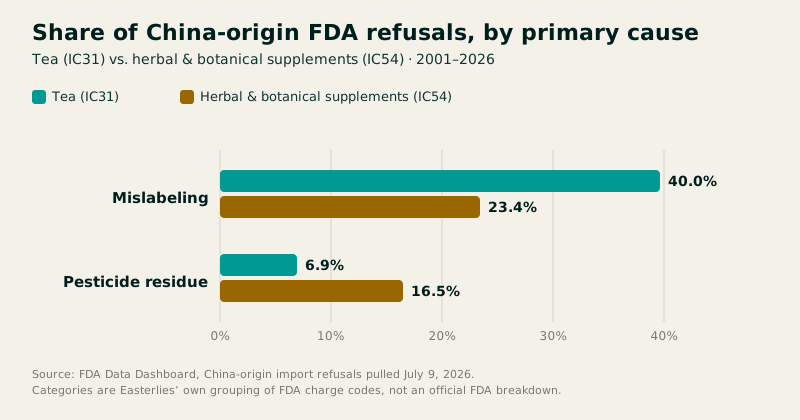
A Nutrition Facts panel built to US FDA formatting rules is a different document from a Chinese nutrition label translated into English. This is also the single biggest reason FDA turns back a China-origin tea shipment in the first place: in our own review of FDA’s import-refusal data, mislabeling accounted for 40.0 percent of China-origin tea refusals, versus 6.9 percent for pesticide residue, the thing most suppliers worry about instead. See the full data breakdown for the methodology.
The format gaps that cause this are specific and differ by document:
- Nutrition Facts panel — serving size conventions, rounding rules, and required nutrients differ from a translated Chinese label.
- Country-of-origin marking — has its own placement and wording requirements.
- Allergen declarations — must follow the US format, not just list the same allergens.
Buyers will flag a label that reads correctly but is not built to the US template.
None of this is a reason to be intimidated. It’s a reason to have the paperwork organized before the first buyer conversation instead of during it. A supplier who can hand over a clean registration number, a real CoA, and a straight answer on certification status looks materially more ready than one who has to go find those things after being asked.
大多数第一次出海的供应商,都是被买家问到才知道对方的质量团队要什么,而且往往是在谈判进行到一半、时间又紧的时候。下面这份清单不是全部,每个买家的核查表都略有不同,但这几类几乎每次都会遇到。
FDA 工厂注册
任何一家美国境外、生产或加工供美国消费食品的工厂,都必须在 FDA 注册,并且每两年更新一次。这只是一个基础核查项,不代表产品质量本身,但买家的合规团队通常会很早就要你的注册编号,拿不出来就没法往下谈。
境外供应商核查项目(FSVP)
根据美国《食品安全现代化法案》(FSMA),核实境外供应商食品安全操作的法律责任在美国进口商身上,不在你身上。但实际操作中,进口商的核查工作要靠你的资料来完成:你的危害分析、你的过程控制、你的检测记录。这些材料提前整理好的供应商,过这一关明显更快;临时现凑的,往往被卡住。
GFSI 认可的认证
零售和餐饮渠道的买家,越来越多要求供应商拿到全球食品安全倡议(GFSI)认可体系下的认证,常见的是 SQF、BRCGS 或 FSSC 22000。不是每个买家都要求,但不少大型零售客户把它当成准入门槛,而不是加分项。如果你的目标是这类买家,先搞清楚对方偏好哪个体系,再决定要不要投入做审核。
一份真正有内容的检测报告(CoA)
正规的 CoA 应该是批次专属的,至少要写明:
- 批号
- 检测日期
- 检测机构
- 实测结果,以及对照的限值
但早期供应商沟通中流转的不少 CoA,要么是通用模板、没有日期,要么只写”结果留存”却不附实际数据。见过几百份报告的审核员,大概十秒钟就能看出区别。这也是在谈判还没真正开始前就丢掉可信度的一个常见原因。
污染物和重金属检测
具体到茶叶,铅和镉的含量在美国一直受关注,部分原因是加州 65 号提案(Proposition 65)要求含有特定化学物质且超过限定阈值的产品加贴警示标签。这不是说每一款茶都需要警示标签,但买家的质量团队在准入阶段通常会想看近期的重金属检测结果,首单尤其如此。
标签要符合美国格式,不只是符合美国语言
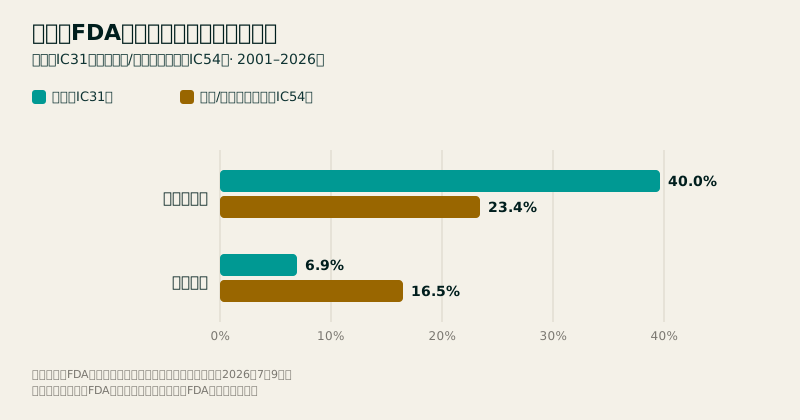
按 FDA 格式规则做的营养成分表(Nutrition Facts),和把中文营养标签翻译成英文,是两回事。这也是 FDA 拒收中国产茶叶最主要的单一原因:我们自己梳理 FDA 进口拒收数据发现,标签不合规占中国产茶叶拒收的 40.0%,而大家更担心的农药残留只占 6.9%。完整的数据拆解见这篇分析。
具体的格式缺口分散在不同文件里:
- 营养成分表——份量单位的惯例、四舍五入的规则、必须列出的营养素,都和翻译过的中文标签不一样。
- 原产地标注——有自己的位置和措辞要求。
- 过敏原声明——要按美国格式来写,不是把同样的过敏原列出来就够了。
买家会挑出那些”英文没问题、但格式不对”的标签。
这些都不是让人却步的理由,而是提醒你:该在第一次和买家谈之前把材料理顺,而不是等谈的时候再补。能直接拿出干净的注册编号、真实的 CoA、认证情况的明确答复,这样的供应商看起来会比临时找材料的对手更靠谱一截。
About Easterlies关于信风出海
Good products deserve to cross oceans. Easterlies carries yours all the way across.好产品值得跨过大洋,信风出海为您一路助航。
Book a free 30-minute call预约 30 分钟免费评估